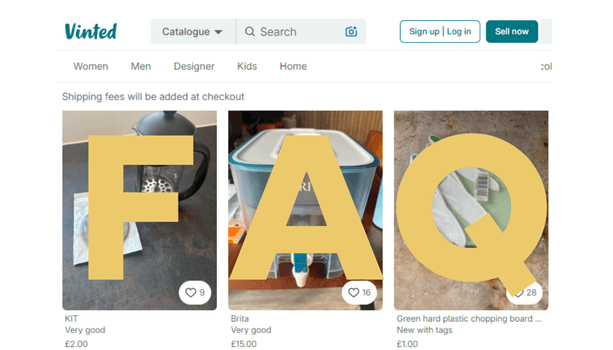
“I’m just selling my old clothes on Vinted. Do I need to pay tax?”
Usually, no.
If you are selling second hand clothes, shoes, toys, books or similar items that you originally bought for yourself, and you are simply getting rid of things you no longer want, HMRC generally does not treat that as trading income.
That said, there is an important exception. If you sell a single personal item for £6,000 or more, Capital Gains Tax could come into the picture. That is not the same as Income Tax, and it usually applies to higher value possessions rather than everyday used clothing.
“What if I buy bundles or wholesale stock and flip them for profit?”
That is far more likely to be treated as a business.
HMRC says that if you buy or make goods to sell at a profit, you are likely to be trading. Their guidance even gives examples of people buying items to resell across different platforms and having to consider the combined income.
So if you are sourcing vintage bundles, retail arbitrage stock, clearance items, collectibles or cosmetics with the aim of selling for more, you should assume HMRC may view that as trading income.
“Does the £1,000 limit mean profit or sales?”
This catches a lot of sellers out.
The £1,000 trading allowance is based on income before expenses, not profit. HMRC says if your total income from trading activities is more than £1,000 for the tax year, you need to consider telling them about it.
So if you sold £1,400 of goods you bought to resell, even if your profit was only £250 after postage, packaging and platform fees, you are already over the trading allowance threshold and should check your position.
“Is the £1,000 per platform?”
No.
It is not £1,000 on eBay plus another £1,000 on Vinted plus another £1,000 somewhere else.
HMRC says you need to add together income from your trading activities. Their examples also show income across more than one platform being combined.
So if you make:
- £600 on Vinted
- £500 on eBay
- £300 on Facebook Marketplace
that is £1,400 total trading income, not three separate pots.
“How does HMRC decide if I’m trading?”
There is no single magic test.
HMRC uses what are often called the badges of trade. They look at the overall picture, including things like profit motive, repeated sales, the nature of the items, how organised the activity is, and the gap between buying and selling. HMRC’s manual makes clear that no one factor decides it on its own. It is about the overall impression.
In everyday terms, these are the kinds of questions HMRC may ask:
- Did you buy the item mainly to resell it?
- Are you doing this regularly?
- Are you trying to make a profit?
- Are you running it in a business-like way?
- Are you listing similar items again and again?
The more the answer is “yes”, the more likely it is that you are trading.
“What if I have a full time job already?”
You may still need to declare your selling income.
Having a salary through PAYE does not cancel out the need to report separate self-employed or trading income. HMRC’s side hustle guidance makes clear that extra income from selling goods or providing services can still need to be reported.
Your main job and your online selling can sit side by side. The question is whether the online activity counts as taxable trading income.
“Do eBay and Vinted report my sales to HMRC?”
Platforms can report seller information to HMRC under digital platform reporting rules.
HMRC says UK digital platform operators report seller details and income from selling goods or services on their platforms, with information collected yearly and sent by the following January. HMRC has also stated clearly that this is not a new tax. It is a reporting system. Data being shared does not automatically mean you owe tax, but it does mean HMRC can compare platform data with what you report.
That is an important point. Plenty of casual sellers still will not owe tax. But if you are trading and not declaring it, the reporting rules make it harder to stay off HMRC’s radar.
“If I go over £1,000, do I definitely pay tax?”
Not always.
Going over £1,000 usually means you need to look more closely and may need to register and complete a tax return, but tax is charged on profit, not turnover, for trading income. HMRC also allows eligible sellers to use the trading allowance instead of claiming expenses, though you generally cannot use both for the same income in the same way.
So your actual tax bill depends on:
- your profit after allowable expenses, or
- whether using the trading allowance is better for you,
- and your wider income position.
“What expenses can online sellers usually claim?”
If you are trading, HMRC allows self-employed people to claim allowable business expenses. For resellers, that can include goods for resale, raw materials, and certain direct costs.
Common examples can include:
- stock you bought to resell
- packaging
- postage
- marketplace fees
- payment processing fees
- a business share of certain other costs, where genuinely allowable
But if you use the £1,000 trading allowance, HMRC says you generally cannot also claim expenses against the same income.
“What about VAT?”
This is a separate issue from Income Tax.
If you are selling as a business and your VAT taxable turnover goes over £90,000 a year, HMRC says you must register for VAT in the UK. Most medium sized casual resellers will never get close to that, but some fast-growing online sellers absolutely do.
So there are really two different questions:
- Do I need to report trading income to HMRC?
- Is my turnover high enough for VAT registration?
Do not mix them up.
A practical rule of thumb for medium sized online sellers
If you are a medium sized seller using eBay, Vinted and other platforms, this is a sensible way to think about it:
You probably should speak to an accountant or at least do a proper HMRC check if most of the following apply:
- you buy stock specifically to resell
- you make or customise items to sell
- you sell regularly, not just occasionally
- you keep stock levels
- you run the activity in a structured way
- your total sales income from trading is over £1,000 a year
- you use more than one platform to grow revenue
That does not automatically mean a scary tax bill. It just means you are moving out of “casual clear-out” territory and into something HMRC is more likely to class as a trade.
The biggest mistake sellers make
The biggest mistake is thinking:
“I only sold online here and there, so it probably doesn’t count.”
HMRC is not only looking at whether you feel like a business. They look at what you are actually doing. Repeated selling for profit can still count as trading even if you see it as a side income.
The second big mistake is focusing only on profit and forgetting the £1,000 gross income threshold. HMRC’s own guidance is very clear on that point.
If you think you may be liable to tax on trading income, please speak to us.